
Andy Paterson • July 7th, 2026.
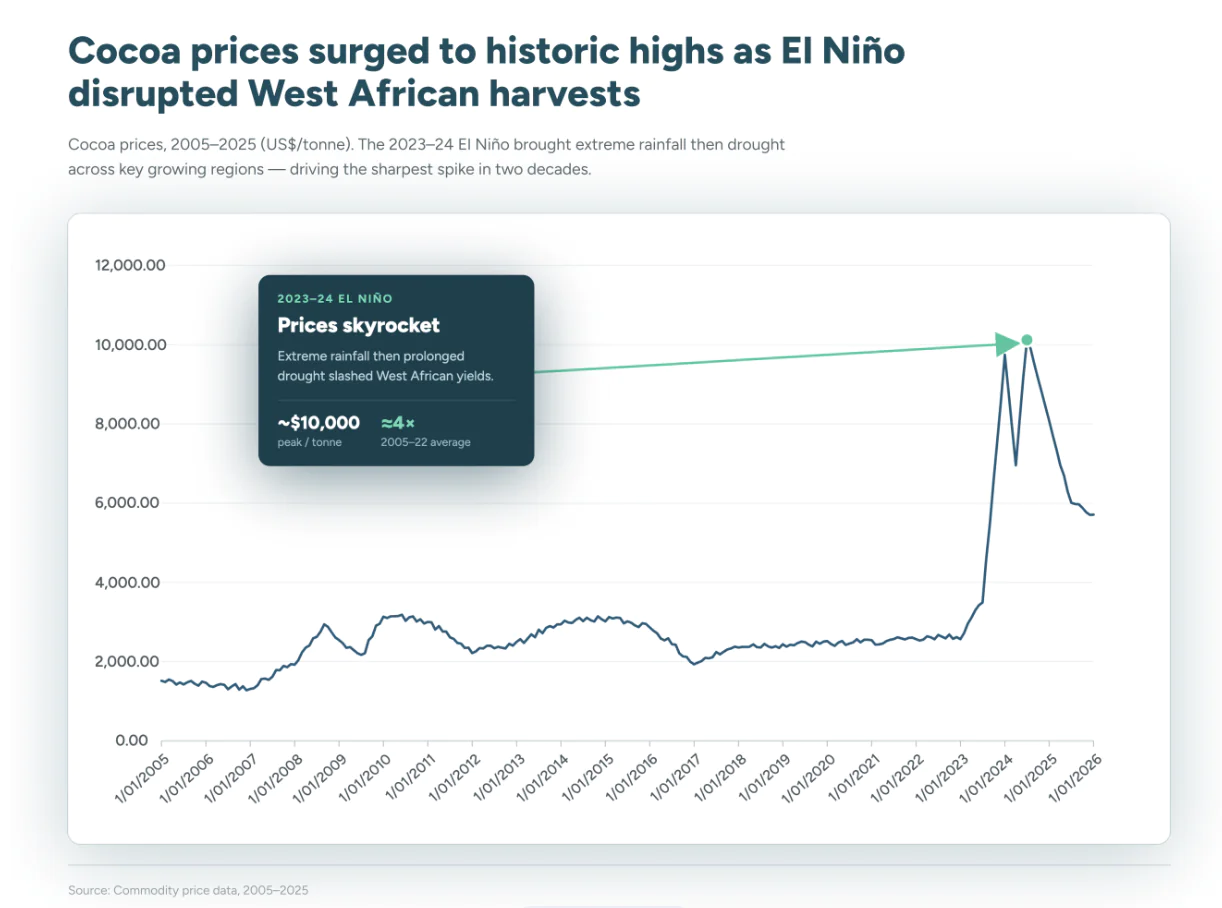
Climate-driven yield disruptions caused cocoa prices to rise by more than 400% between 2023 and 2024, shocking the chocolate and cocoa supply chain and forcing manufacturers to reformulate their products.
While many viewed the price surge as a temporary cocoa supply shortage, the reality is more concerning. Climate change is increasingly disrupting cocoa supply chains across the world’s most important growing regions, exposing a system that depends heavily on a concentrated supply from a small number of vulnerable countries.
In this article, we’ll show why this geographic concentration poses a risk, how climate change worsens the issue, and how businesses can minimize the impact of rising costs and ensure continuity of supply.
Cocoa has a very thin growing range, just 20° north and south of the equator. With heavy concentration in the West Coast of Africa (The Ivory Coast, Ghana, and Nigeria)
That means a drought in one region can ripple through the global coca supply chain and impact all of the world’s largest chocolate manufacturers.
The 2023–24 cocoa crisis demonstrated this perfectly. A combination of extreme rainfall, black pod disease, drought, and heat stress across West Africa led to one of the largest supply shocks in decades, sending cocoa prices to record highs.
Cocoa depends on a remarkably stable climate. Small changes in temperature, rainfall timing, or humidity can affect flowering, pollination, pod development, disease pressure, and bean quality. Unlike many annual crops, cocoa trees remain in the field for decades, making them far less adaptable to changing climate conditions.
Cocoa thrives in temperatures below 32°C (90°F). Any temperatures above that impact yields and bean quality, especially during the flowering stages. A recent study from Climate Central found that climate change has already resulted in 40 more days a year above 32°C in West Africa. The trend is expected to continue as global temperatures rise.
When heat and water stress are combined, they compound the impacts on cocoa yields. Droughts can result in some of the most impactful cocoa supply shocks. The 2023/24 surge in cocoa prices, for example, was driven by a mix of water stress and heat, which followed a period of extreme rainfall.
Extreme rainfall increases disease pressure, floods root systems, and can damage flowers during the flowering stage. Climate change is making extreme weather swings more common, with bouts of above-average rainfall followed by drought. In 2026, above-average rainfall has heightened fears of low yields or quality disruptions in the Ivory Coast’s mid-harvest.
Climate Change Is Making Disease Risk Worse
One of the biggest factors impacting yields, particularly in West Africa, is disease, which climate change-driven extreme rainfall and increased temperatures are exacerbating.
Excessive humidity, plus rain and waterlogging, coupled with increased temperatures, is pushing up the prevalence of black pod disease, particularly in Ghana.
The likelihood of black pod disease doubles with just 400mm of additional rain, and if it impacts mature pods, it can reduce yields by up to 60%.
Unlike heat or rainfall, disease isn’t driven by a single weather variable. Black pod outbreaks occur when multiple conditions, like sustained humidity, rainfall frequency, soil moisture, and temperature, align.
This means procurement teams monitoring only rainfall forecasts can still miss major production risks. Understanding disease requires combining multiple climate signals to build a disease risk profile, helping producers and suppliers make better prevention decisions.
During the last super El Niño, 2015-2016, a study in Brazil found that an El Niño-driven drought caused 15% of trees to die and reduced cocoa yields by 89%. In 2026, El Niño is expected to be even stronger with more extreme impacts.
The El Niño Southern Oscillation (ENSO) is a periodic climate pattern in which unusually warm waters develop across the central and eastern tropical Pacific Ocean, disrupting global weather patterns and altering temperature and rainfall around the world.
In cocoa-producing regions such as West Africa, El Niño often brings hotter, drier conditions, increasing heat and drought stress, while other producing regions can experience heavier rainfall and greater disease pressure.
In 2023/24, El Niño wiped 14% off the global cocoa supply, and prices hit record highs. Causing global chocolate manufacturers to scramble to ensure continuity and some to reformulate their recipes to include cocoa substitutes.
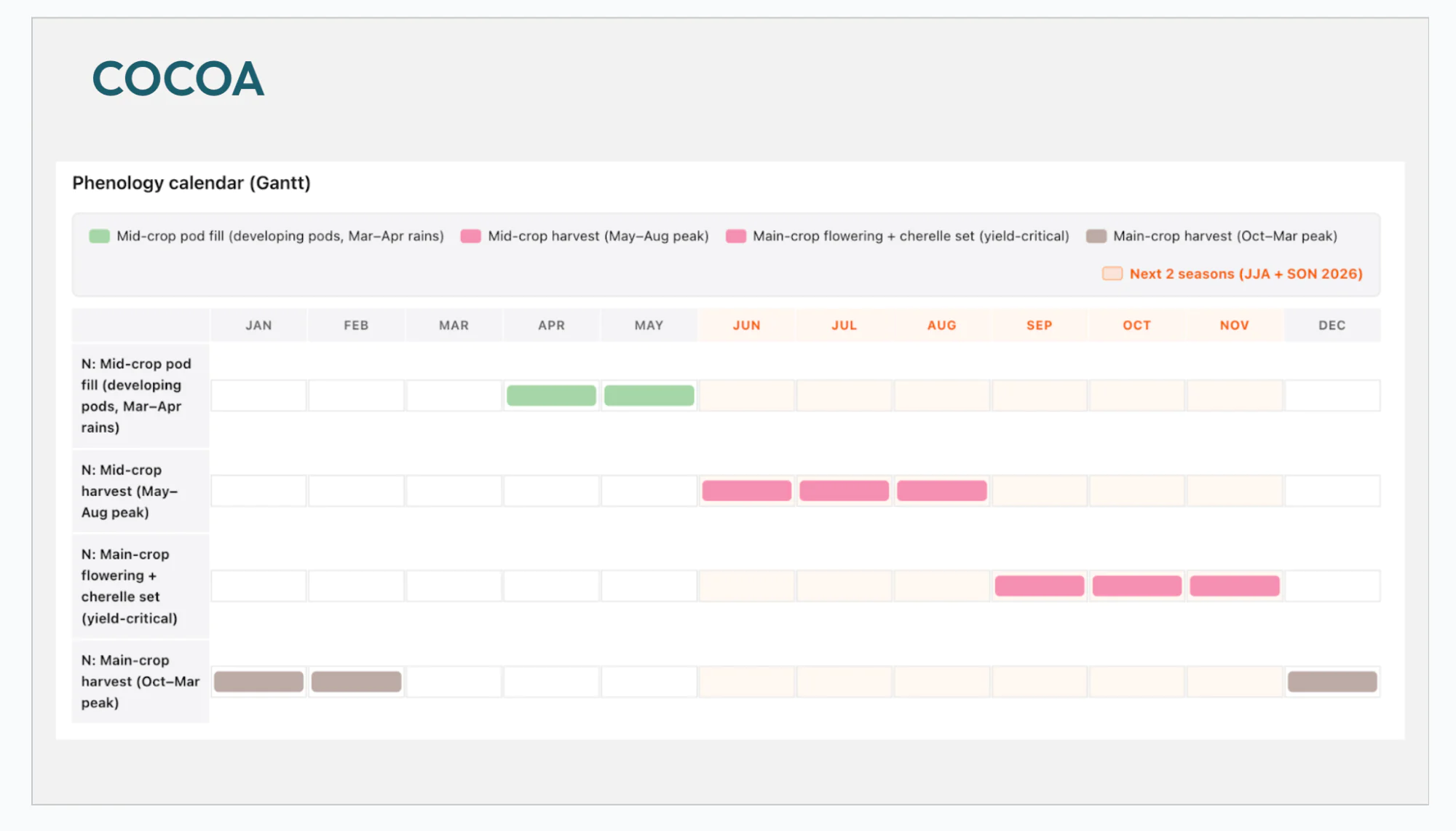
This year’s event will occur during yield-critical periods, likely leading to another year of low yields and high prices.
ClimateAi’s latest seasonal outlook suggests Indonesia faces an 87% probability of high heat damage, while Ghana faces a 71% probability of medium heat stress during key growing periods.
While individual weather events remain uncertain, these seasonal probabilities allow procurement teams to identify sourcing risks months before yield losses appear in official production estimates.
Most procurement teams still rely on:
But contracts are signed months ahead of harvest, leaving buyers exposed to lower yield, lower quality, or higher prices. Ahead of 2026’s El Niño, granular multi-month lead times are critical for procurement planning. Standard weather forecasts are simply too short to support these decisions.
Cocoa price increases and supply shortages are not a blip. They are becoming more common as climate risks intensify.
Leading buyers are assessing risks across their supplier base, looking for new regions where production is expanding, and are developing new climate-resilient varieties.
The real alpha for procurement leaders comes from understanding the climate risks they face season to season and knowing them months in advance to make better decisions about contracting, sourcing, and timing.
Rather than relying heavily on West Africa, leading buyers are diversifying sourcing portfolios across emerging origins such as Ecuador, Indonesia, Brazil, Cameroon, and Nigeria. While no region is immune to climate risk, diversification reduces the likelihood that a single regional weather event disrupts the entire supply chain.
Leading buyers are also investing in long-term resilience by supporting the development of climate-resilient cocoa varieties, agroforestry systems, improved drainage and irrigation, and farmer advisory services to reduce exposure to heat, drought, and disease.
👉 Want to discover the ROI of different cocoa production adaptations? Reach out for a demo.
Leading chocolate manufacturers are dynamically pricing their products based on expected future cocoa costs or reformulating them with cocoa alternatives to keep costs low.
For buyers who are still reacting to climate risks and the resulting supply and price shocks. ClimateAi helps companies be more proactive and ensure they get the supply and prices they expect through three primary actions:
Monitoring cocoa climate risks months ahead of critical phenological stages and harvesting times across all major suppliers globally gives buyers the latitude to understand where yields will drop or hold steady, and to lock in prices.
Over the longer term, procurement leaders who know where new centers of supply will be over multiple decades can begin building supply chain infrastructure early to gain a competitive advantage.
Incorporate ENSO outlooks, seasonal forecasts, and crop-specific risk signals into contracting, supplier engagement, and inventory planning months before harvest.
Use climate risk forecasts to diversify suppliers, secure contracts earlier, hedge exposure, and prepare contingency plans before production estimates or commodity markets react.
The ongoing cocoa crisis is not just a short-term supply shortage. It is a warning sign for one of the world’s most climate-exposed commodities.
With more than 60% of global cocoa production concentrated in the Ivory Coast and Ghana, climate shocks in West Africa can quickly become global challenges for sourcing, pricing, and manufacturing. Heat stress, drought, extreme rainfall, and black pod disease are already reducing yields and quality. El Niño events can intensify these risks across multiple growing regions at once.
For chocolate manufacturers, ingredient buyers, commodity traders, and procurement teams, climate intelligence is required to anticipate where production risks are building, how severe they may become, and which sourcing regions are most exposed.
Companies that act early will be better positioned to manage volatility, diversify their supply, protect margins, and build a more resilient cocoa supply chain.

Andy Paterson is a content creator and strategist at ClimateAi. Before joining the team, he was a content leader at various climate and sustainability start-ups and enterprises.
Andy has held writing, content strategy, and editing roles at BCG, Persefoni, and Good.Lab. He has helped build one of the industry’s most popular newsletters and regularly publishes environmental science articles with Research Publishing.