
ClimateLens 2.0 is Here → See what’s new
Andy Paterson • December 18th, 2025.
2026 will be a pivotal year for climate adaptation. Both 2024 and 2025 were record-breaking years for climate-related costs. Those costs are expected to increase. At ClimateAi, we are reflecting on what has helped our clients bring down the cost of inaction and sharing these findings as climate adaptation playbooks to help others prepare for 2026.
We recently held a webinar (below) on this subject. Sharing what our climate models expect in the coming year and how that should shape your strategic decision-making. For those who missed the webinar, we have summarized the takeaways below.
What We’re Hearing From Leaders Going into 2026
Businesses across sectors understand that the climate problem is large and growing. They also see that AI has significant potential to mitigate climate challenges.
Where they struggle is determining where to focus, prioritize, and act to maximize ROI. We are hearing from our most successful clients that the best way to ensure this is to take a highly dynamic, proactive approach to planning and make those plans cross-functional across the company.
As we enter 2026, we expect increased variability day to day and week to week, but we are seeing fewer signals about the overall trend due to a weak El Niño. The only way to monitor for significant changes as the year progresses is to conduct regular reviews and adjust plans as they arise.
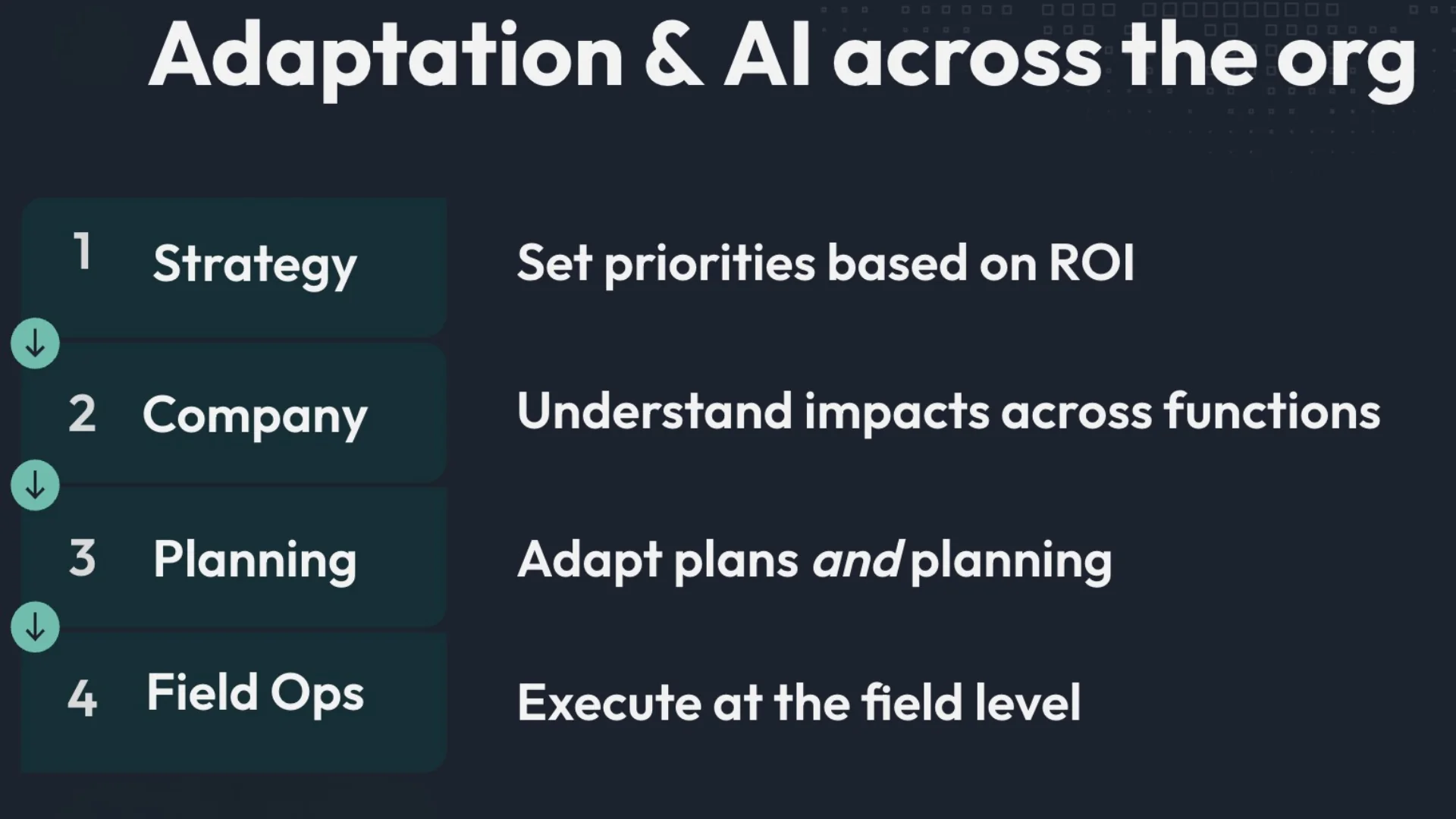
Successful adaptation playbooks in 2026 will be company-wide, dynamic, and driven by ROI. To ensure that is achieved, we put together this four-point framework that guides clients through the implementation of AI and adaptation across multiple levels of the business, starting with strategy:
This step is not about implementing a climate adaptation or AI strategy. It’s about integrating these two into your broader business strategy.
Many of our clients recognize the climate problem and want to know how to implement adaptation, but connecting the dots for the business case is more difficult. In recent work with our partner, the Japanese IT company NEC, we developed a model to estimate the return on investment of specific adaptation actions for agriculture in the Global South.
Our three steps to prioritizing adaptation around ROI:
In 2026, we advise clients to identify the two or three most significant business problems they face related to climate risks, along with 1-2 adaptation solutions. Then we can assess which of those have the strongest business case, and can prioritize accordingly.
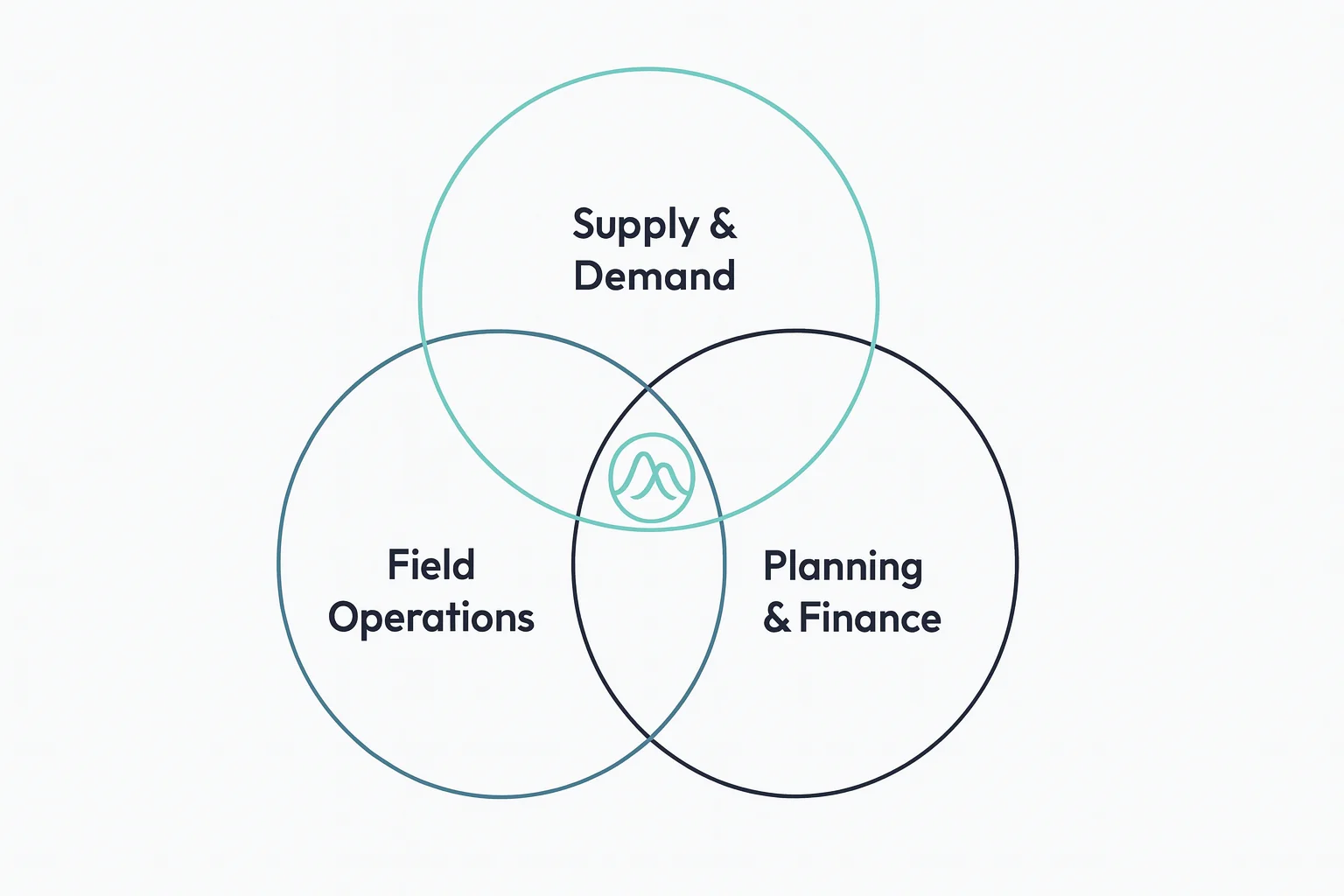
We now know which actions will have the most significant impact and deliver the highest ROI. We now need to implement these actions across the company.
This involves bringing in company stakeholders across finance, procurement, and on-the-ground staff to ensure everyone is working from the same climate truth. Setting up clear and consistent communication channels is critical for this step.
This results in:
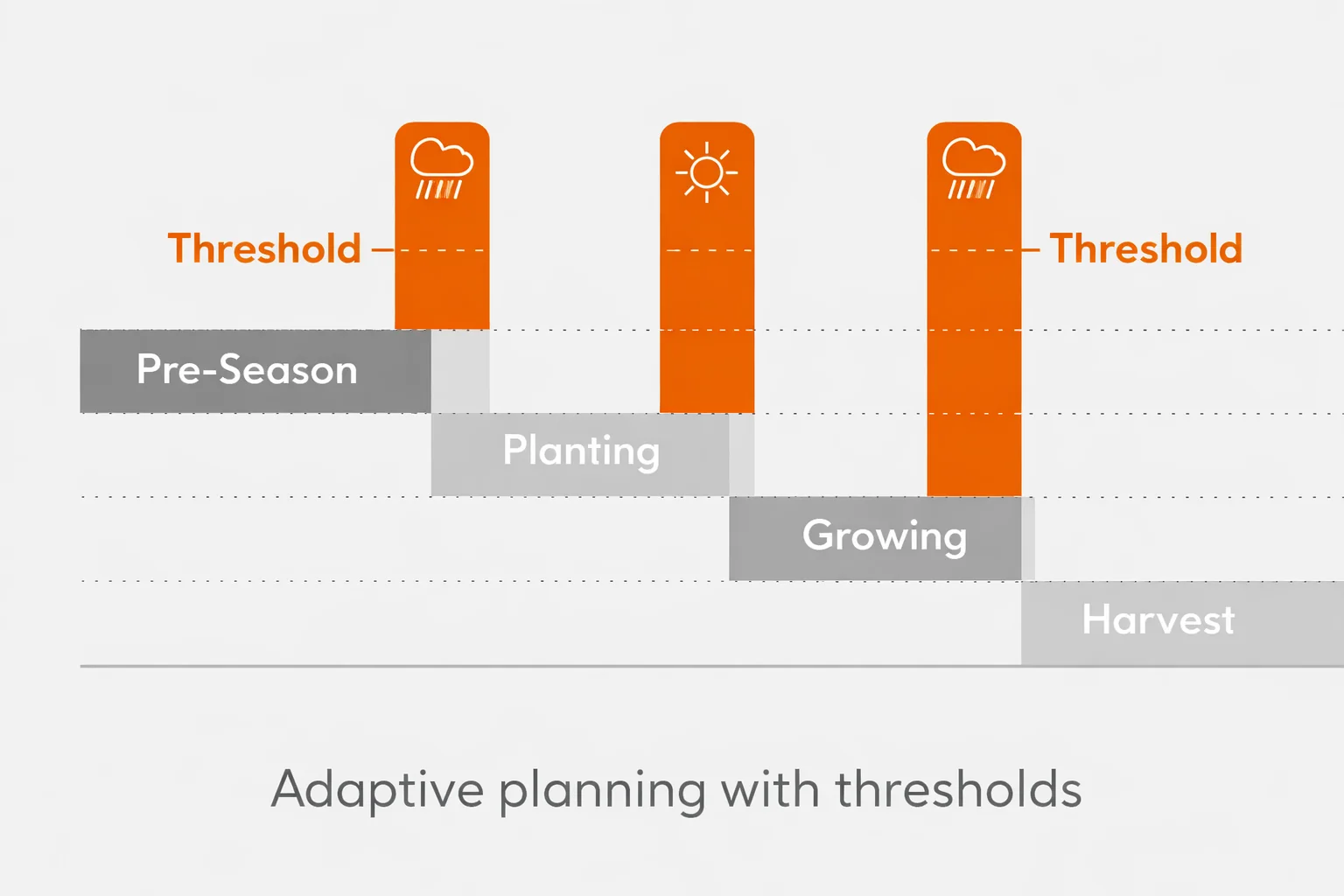
With increasingly unpredictable weather, setting a plan each year at a fixed time is no longer effective. Planning now must be proactive and dynamic, occurring at different times throughout the year as conditions evolve.
We identified an approach that establishes 3-4 thresholds for hazards that, if breached, will lead to crop loss, enabling rapid adjustments to harvesting, logistics, and planting. Setting automated alerts around those thresholds, where our platform e-mails or notifies users, ensures actions are taken promptly.
So our planning approach for 2026 would be to:
Weather unpredictability can lead to highly unproductive company actions across site visits, logistics timing, and supply routes. However, when you take the steps above: Align priorities around ROI, train multiple functions on these priorities, and integrate that into a dynamic planning structure. Employees should now be thinking about how to leverage this technology and insights in the day-to-day running of the business.
In 2026, winners in climate adaptation will adopt more dynamic, proactive strategies integrated across the business. As climate risks accelerate and the cost of inaction on adaptation rises, companies should replicate these playbooks to avoid losses and improve their ROI.
Stay tuned: in 2026, we will continue to improve the accuracy and technological innovation of our models, launch a communications hub to enhance cross-functional engagement, and further integrate our AI agent across our platforms to simplify your adaptation strategies and adoption at the field level.
👉See which adaptation actions would deliver the highest ROI for you in 2026.

Andy Paterson is a content creator and strategist at ClimateAi. Before joining the team, he was a content leader at various climate and sustainability start-ups and enterprises.
Andy has held writing, content strategy, and editing roles at BCG, Persefoni, and Good.Lab. He has helped build one of the industry’s most popular newsletters and regularly publishes environmental science articles with Research Publishing.